



 The Comedian Who Helped Elect JFK — Then Helped Investigate His Murder
Today, political comedians are everywhere. They host late-night television shows, dominate podcasts, and influence public debate. But before there was Jon Stewart, Stephen Colbert, Bill Maher, or John Oliver, there was Mort Sahl.
In the late 1950s and early 1960s, Sahl revolutionized stand-up comedy. Dressed not in a tuxedo but in a sweater, carrying a rolled-up newspaper onto the stage, he delivered blistering, unscripted commentary on politics and current events when most comedians were still telling jokes about their wives and 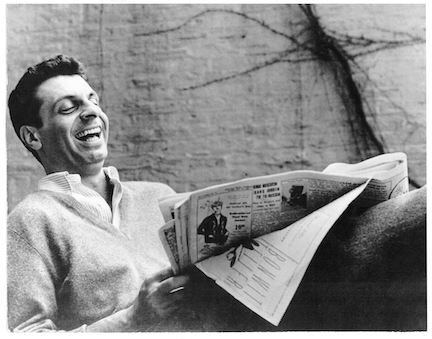
Sahl’s wit was legendary. His observations could be biting, funny, and surprisingly insightful. When Hollywood made a heroic film about former Nazi rocket scientist Wernher von Braun called I Aim at the Stars, Sahl suggested a more appropriate title: “I aim at the stars, but sometimes I hit London.” In a single punchline, he captured the moral ambiguity surrounding von Braun’s transformation from a key figure in Hitler’s rocket program to an architect of America’s space program.
 Another of Sahl’s memorable observations was, “A conservative is someone who believes in reform. But not now.” His gift was not merely telling jokes; it was exposing contradictions and hypocrisies that others overlooked. Audiences came to hear him because he said things that politicians, journalists, and commentators often would not.
Then came November 22, 1963. Kennedy’s assassination devastated Sahl. Although he had often criticized JFK in his act, he admired him deeply and had worked on his campaign. Unlike most Americans, who eventually tried to move forward, Sahl became consumed by understanding what had happened in Dallas. He volunteered his services to New Orleans District Attorney Jim Garrison’s investigation, becoming a deputized, unpaid investigator.
His comedy act changed dramatically. Instead of his trademark rolled-up newspaper, Sahl began carrying the multi-volume Warren Report onto the stage, reading dry testimony and pointing out what he saw as contradictions to increasingly baffled comedy crowds. Sahl had once observed, “If you maintain a consistent political position long enough, you’ll eventually be accused of treason.” Whether one agreed with his conclusions or not, he was discovering the cost of refusing to abandon an unpopular position.
The consequences were severe. Television bookings disappeared. Club owners became 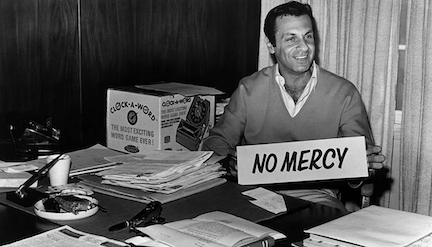
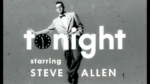
More than sixty years later, Mort Sahl’s story remains surprisingly relevant. From Steve Allen to David Letterman, his talk show appearances invited controversy. His career raises a question that still echoes through our political culture: What happens when an entertainer decides that pursuing the truth matters more than entertaining the audience?
Some might argue that the stakes are just as high today, pointing to modern hosts like Stephen Colbert or Jimmy Kimmel, who have faced partisan boycotts, corporate pressure, and accusations of being “canceled” for their sharp political stances. The Smothers  Brothers were famously canceled due to their political satire. But today’s comedians inhabit a media universe Sahl could scarcely have imagined. If a comedian alienates one audience, television, streaming, podcasts, YouTube, and social media offer other ways to reach millions. Sahl operated in an era when a handful of networks and powerful club owners controlled access to a national audience. When those gatekeepers shut the gate, there was almost nowhere else to go.
Still, the tension Sahl embodied has never disappeared: How far can a comedian challenge powerful institutions before the consequences become deeply personal? Sahl chose the truth as he saw it and paid a tremendous price. 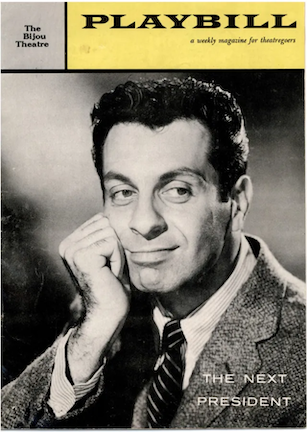
In that sense, Mort Sahl may be remembered not only as a brilliant comic, but as the man who helped transform stand-up comedy from an evening’s amusement into a force that could challenge power.
Interesting!! And how relevant to today.
I’m sure Jimmy Kimmel would agree! So would Stephen Colbert
Loved your article on Mort Sahl. He truly influenced comedy. Really liked his sense of humor and political satire. He definitely was controversial. . .
Carol,
His influence on comedy is hard to overstate. He opens the door for pointed political satire in a way that nobody had really done before.
I’m glad you enjoyed the article!
Barry
He used to appear in Skokie periodically. It was always a fun evening
Michael,
So glad you got to see him. I never had the opportunity to see him in person and I’ll bet it was great.