




A Hidden Artist in the Gilded Age: Amalia Kussner
Guest Post by Kathleen Langone
While many think of the well-known Gilded Age artists, like John Singer Sargent, there was 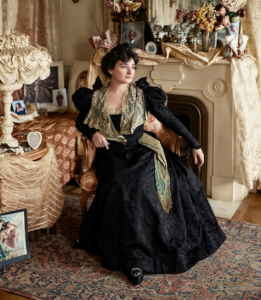 another artist- almost as popular at the time- Amalia Kussner. But her artwork became lost in history, along with most of the story of her incredible life.
Her portraits were different in that they were miniatures, often measuring no more than six by four inches – sometimes less. What further distinguished her art was how she styled her sitters – wrapping them in swaths of fabric like tulle and satin, in sometimes risqué poses.
Kussner completed no fewer than fifty portraits during the 1890s in New York City, and her sitters included Mrs. Lina Astor and Alva Vanderbilt. Her miniatures were often on display at prestigious venues like the National Academy of Design, which displayed the finest portrait art of this time.
The Start of Amalia Kussner’s Career
Her origins were simple: she was born to a middle-class family in Indiana. But her parents soon recognized her talents and paid for art lessons over many years at a local girls’ school. She eventually started a business in her hometown doing portraits and providing art lessons during her early twenties. She did receive some recognition from wealthy families in Chicago, but soon realized New York would be the place to further her career.
She received an invitation from a school friend, Alice Fischer, who was already well-known in New York as an actress. When Kussner arrived, through the help of this woman, Kussner connected with the wealthy women of New York. Many of whom were part of “the 400” list, created by Mrs. Astor and Ward McAllister, as the preferred members of society.
To Europe and Beyond
Her connections soon went beyond the wealthy New Yorkers, and she was on her way to fame and fortune in England in 1896. Her initial and impressive commission of royalty was of Consuelo Vanderbilt, now the Duchess of Marlborough, after her forced marriage to the Duke of Marlborough. This portrait was likely the first done of Consuelo, after arriving at Blenheim Palace at the end of her honeymoon.
During this year, she was recognized as a significant talent by Sir John Millais, then the 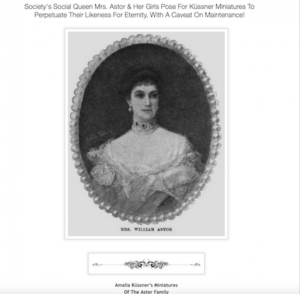 president of the Royal Academy of Arts in London, and her miniatures were displayed at the institution. John Singer Sargent was already inducted as a member of the Academy – and likely interacted with Kussner. In the summer of 1897, she painted the Prince of Wales, who would soon become King Edward VII.
Sargent and Kussner were both quite popular in the early years of the Edwardian Era.
Once again, her fame brought her commissions from Czar Nicholas II of Russia, and she traveled there in 1899 to paint many members of the Romanov family. Later that year, she even traveled to South Africa to paint Cecil Rhodes in the middle of the Boer War. She ended up being trapped at the Kimberley diamond compound for months, surviving shelling by the Boers and food shortages. She escaped during a lull in the fighting, made it back to Cape Town, and eventually reached New York in February of 1900.
Who Was She as a Person?
Knowing all of this, one must step back and wonder about her courage and character – to 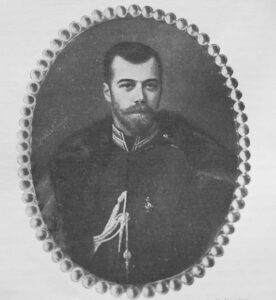 have accomplished what she did. There is no doubt she was quite adept at promoting herself and that she stepped outside the boundaries of acceptable behavior for women in the late Victorian era. She even propagated some lies about her age by ten years, appearing as a young ingenue upon her arrival in New York. She also dressed herself in the famous House of Worth gowns, appearing to be “like” the wealthy women she painted.
The myth of being over ten years younger helped her avoid for many years the stigma of NOT being married. Though she eventually did marry, there are questions about whether it was a “love match” or an opportunity to climb higher in society. But once again – going against accepted trends, she did not stop her portrait work and continued her career for another eleven years.
Her career even survived a mysterious lawsuit shortly after her marriage, the records of which cannot be found to this day.
Why is She Unknown?
There are several reasons she is largely unknown as an artist. The primary reason is that she chose not to join art societies that would usually legitimize artists and add their work to permanent museum collections. Her beautiful work is on display at only two American museums and just a few historical societies. Though she did paint many of royalty and other famous persons, miniature portrait art is less appreciated than life-size portraits. But her life story is fascinating for many reasons – not just for her talent but for how she navigated the Gilded Age society in New York and then on to the Edwardian Era in England.
About The Author: Kathleen Langone
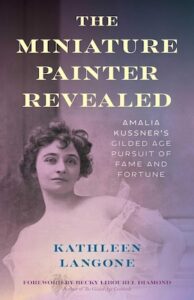 I have just published her biography, available at Amazon, which details the full story of her life and all her amazing accomplishments and adventures.
Furthermore, the book has just received a Bronze award in the Biography category from the Independent Publisher Book Awards. For more information, please refer to




Great article. Very interesting. I really enjoyed reading about the artist Amalia Kussner.
So glad you enjoyed this article … for more info you can contact me (the author) at http://www.kathleenlangone.com/contact
Have a great day!
Kathleen –
Thank you for your wonderful article!
Barry