
Few American figures embodied brilliance, power, and outright strangeness as completely 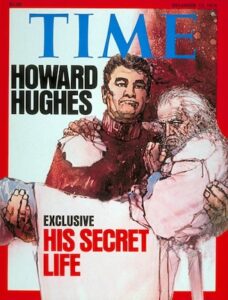 as Howard Hughes. By the time of his death in 1976, Hughes was one of the richest men in the world, a pioneer of aviation, a Hollywood mogul, and a defense contractor whose projects shaped the Cold War era. He was also famously eccentric—reclusive, obsessive, and increasingly detached from the outside world. Hughes vanished for long stretches of time, lived in darkened hotel rooms, dictated memos on scraps of paper, and trusted almost no one. That reputation would become central to one of the strangest inheritance stories in American history.
According to Utah gas station owner Melvin Dummar, the story began on a 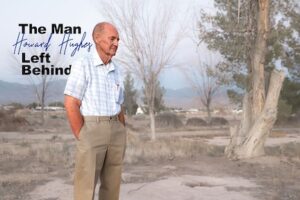 cold night in the Nevada desert. Dummar claimed he found an elderly, disheveled man by the side of the road who appeared sick and confused. He gave the stranger a ride to Las Vegas, dropped him off near a hotel, and thought little more of it—until he later realized the man he helped was Howard Hughes. Dummar insisted he did not ask for money or recognition, but believed Hughes remembered the act of kindness.
The controversy erupted after Hughes’s death, when a handwritten will surfaced naming  Melvin Dummar as a beneficiary of roughly $156 million. The document was immediately challenged. Handwriting experts raised serious doubts, Hughes’s associates denied any knowledge of it, and critics pointed to inconsistencies in the document itself. Supporters countered that its oddities reflected Hughes’s increasingly erratic behavior near the end of his life. The case became a media sensation, dividing the public between those who saw Dummar as a sincere Good Samaritan and those who believed the story was an elaborate fabrication.
In the end, the courts rejected the will, ruling that it could not be authenticated. Dummar received nothing from the Hughes estate. Yet the story refused to disappear. Dummar never recanted his account and repeated it consistently to friends and family for the rest of his life. He died in 2018, still insisting the ride had happened. The story was later brought to the screen in the acclaimed film Melvin and Howard, which captured not the legal outcome, but the emotional core of the mystery.
 Looking back, most historians agree on a careful distinction: the will was almost certainly fake—but the ride itself may well have happened. Hughes was known to move unpredictably, appear disoriented in public, and reward people in unusual ways. Whether Melvin Dummar helped Howard Hughes on a lonely stretch of desert highway may never be proven. But the persistence of the story reminds us why Hughes continues to fascinate: his life was so strange, so opaque, that even decades later, the line between fact and myth remains impossible to draw with certainty.