



Waiting for Midnight: The Painting That Captured Freedom’s Eve
Slavery in the United States did not legally end with the Emancipation Proclamation. It survived until the ratification of the Thirteenth Amendment on December 6, 1865, which permanently abolished human bondage. (Abraham Lincoln was murdered 235 days before the barbaric practice of enslavement ended.) Even the surrender of the armies of the traitors in rebellion against the United States did not, by itself, end slavery. But years earlier, as the war dragged on and its purpose came under intense scrutiny, President Abraham Lincoln took a decisive—and controversial—step that changed the moral direction of the conflict.
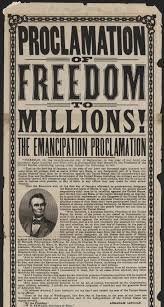 In September 1862, Lincoln announced that the Emancipation Proclamation would take effect on January 1, 1863. The proclamation did not end slavery everywhere, nor did it immediately free all enslaved people. What it did was just as consequential: it made the destruction of slavery an explicit goal of the Civil War, transforming the conflict from a war fought solely to preserve the Union into a battle for human freedom.
Crucially, Lincoln designed the order to take effect at midnight — the very first moment of the new year. As December 31, 1862, slipped into its final hours, enslaved and free Black Americans who had heard the news gathered to wait, pray, and watch the clock, knowing that time itself might soon alter their lives.
Waiting for Midnight: The Painting That Captured Freedom’s Eve
That moment of waiting would soon be captured in one of the most powerful images of the Civil War era.
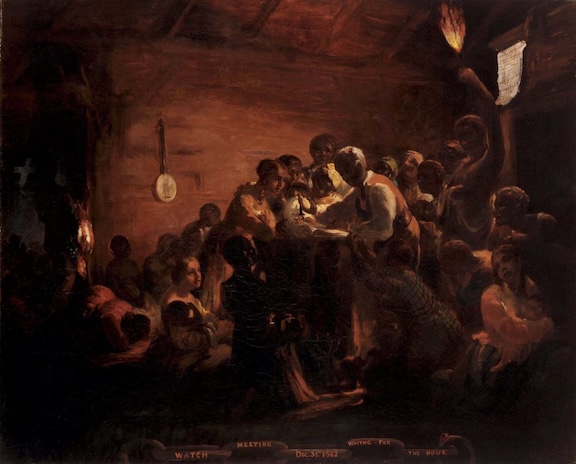 That image is Waiting for the Hour (1862), painted by William Tolman Carlton.
The painting depicts enslaved African Americans gathered in a modest interior, their eyes fixed on a clock as midnight approaches. There are no battlefield scenes or political figures — only the quiet intensity of waiting, as lives hang on the movement of a single minute hand. The power of the image was widely recognized in its own time, and a version of the painting later became part of the White House collection, displayed in the Lincoln Bedroom — a rare honor that underscores its enduring historical and symbolic importance. The painting resonated because it reflected a real experience: thousands of enslaved people truly did wait through that night, uncertain what dawn would bring.
That act of waiting became a tradition. In Black churches, December 31 came to be known as Watch Night, or Freedom’s Eve. Congregations gathered on New Year’s Eve not simply to welcome a new year, but to remember the night freedom was promised at midnight. Prayer, scripture, song, and reflection replaced fireworks and champagne. Over time, Watch Night services blended remembrance with renewal, connecting emancipation to faith, endurance, and the unfinished work of justice.
 More than 160 years later, Watch Night services still exist. Many Black churches across the United States continue to gather each New Year’s Eve — sometimes at midnight, sometimes earlier in the evening — to honor that first Freedom’s Eve. Like Carlton’s painting, these services remind us that emancipation was not an abstract policy. It was a moment measured in seconds, watched by real people, waiting for a clock to strike twelve and change the meaning of their lives forever.

Very interesting article. Thank you for sharing. Have a very Happy and Healthy New Year! May Freedom Ring!!